Backyard Hot Tub Electrical: Pre-Wire, Safety & Costs
Planning a backyard hot tub? Learn how pre-wiring works, what your electrician does, key safety rules, and what to budget for a typical spa hookup.
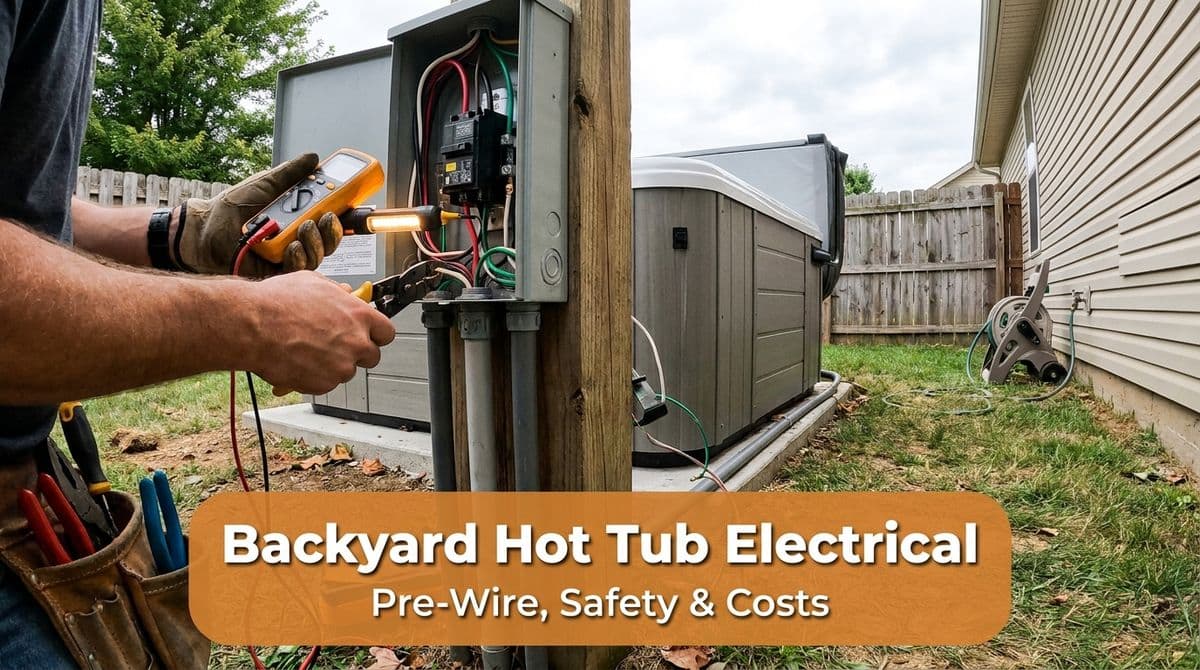
Planning the Electrical for a New Backyard Hot Tub
We recently got a call from a homeowner — let's call him Mark — who was building a new home and planning to add a hot tub in the backyard. The builder was including a pre-wire for the spa, but Mark needed an electrician to finish the run from the house to the hot tub pad so it would be ready on delivery day.
He was out of state while the house was under construction, so his big questions were: What do I need the builder to do, what will my electrician handle, how much does it usually cost, and how do we make sure everything is safe and up to code?
We walk through this process with new hot tub owners all the time, so I'll share the same guidance we gave Mark to help you plan your own backyard spa project.
What “Pre-Wiring” for a Hot Tub Really Means
In Mark's case, the builder was providing a pre-wire. That usually means they will:
- Run the main electrical feed from the panel to a point on the exterior wall
- Stub the conduit out of the wall near where the hot tub will be
- Leave room in the electrical panel for the spa breaker (or install it, depending on agreement)
What the builder typically doesn't do is the final connection from that stub-out to the actual hot tub location. That's where we come in.
For Mark, the run from the house to the back of the spa pad was about 10–15 feet, which is pretty common and helps keep costs down. The shorter and more direct the path, the simpler the job usually is.
What Your Electrician Usually Handles
When we come in after a builder's pre-wire, here's what we typically take care of:
- Site visit and layout: We meet the construction supervisor or homeowner, confirm the exact spa location, and plan a clean-looking route.
- Running conduit and wire: From the house stub-out to the hot tub pad, usually in PVC conduit underground or along a wall, depending on layout.
- Installing the spa disconnect: A required shutoff box within sight of the tub but not too close (more on that below).
- Final connections and testing: Hooking up to the spa once it's delivered, verifying grounding, GFCI protection, and correct voltage.
For a straightforward 10–15 foot run like Mark's, we gave a ballpark of about $600–$800. That can go up if the run is longer, trenching is needed, or access is difficult, but it gives you a reasonable starting point for budgeting.
Key Safety and Code Points for Backyard Hot Tubs
Anytime we wire a hot tub, safety is the top priority. Even if you're not doing the work yourself, it helps to know the basics so you can ask good questions and spot potential issues.
GFCI Protection and Disconnect Location
Most modern hot tubs require:
- GFCI protection: Either in a special spa panel or in the main service panel.
- Disconnect within sight: A shutoff box you can see from the tub so power can be cut quickly in an emergency.
By code, that disconnect generally needs to be at least a few feet away from the water but still easily reachable. We always walk the homeowner or builder through the best spot that balances safety, convenience, and appearance.
Clearances and Conduit Routing
A few other safety details we pay close attention to:
- Overhead lines: We avoid placing the tub under power lines and maintain required clearances.
- Burial depth: Underground conduit must be buried to the proper depth depending on the wiring method.
- Protected wiring: All exterior wiring must be in appropriate conduit or cable rated for outdoor use.
Done right, most of this is invisible when the job is finished, but it's critical for long-term safety and reliability.
How to Prepare Before Your Electrician Arrives
Mark was coordinating everything from out of state, so we worked directly with his construction supervisor to get access and confirm details. Even if you're local, a little prep makes the job smoother and often cheaper.
Decide on the Exact Spa Location
Before we show up, try to finalize:
- The exact position of the tub pad or concrete slab
- Which side the spa's electrical connection is on (from the manufacturer)
- How you plan to access the equipment panel for future service
A foot or two change in location doesn't sound like much, but it can affect conduit routing, trench length, and where we can mount the disconnect.
Have the Spa Specs Ready
When you call your electrician, have this information handy:
- Brand and model of the hot tub
- Voltage and amperage requirements (often 240V, 40–60A)
- Whether it needs a dedicated circuit (most do)
Mark's tub was coming from a local spa dealer, so we could easily look up the requirements, but sending us the spec sheet or a photo of the label helps us size the wire and breakers correctly the first time.
Budgeting and Timing Your Hot Tub Electrical Work
For many homeowners, the two big questions are how much and when.
As a rough guide, for a simple run like Mark's (10–15 feet, good access, no major obstacles), we often land in that $600–$800 range for the exterior portion. Costs can increase if:
- The panel is far from the tub location
- Trenching through hardscape or landscaping is required
- Panel upgrades or additional work are needed
On timing, it usually works best to have us out before the hot tub is delivered so the conduit, disconnect, and wiring are ready to go. Then when the spa arrives, all that's left is the final hookup and testing.
Thinking About a Backyard Hot Tub?
If you're planning a new spa like Mark, your first step is to loop in both your builder (if you're in a new home) and a licensed electrician early. A quick site visit and a clear plan can save you surprises on delivery day and ensure your new backyard retreat is safe, code-compliant, and ready to enjoy.
Have your hot tub model, rough location, and desired timeline handy when you call, and we'll help you work out the details from there.