Breaker Keeps Tripping and Won’t Reset? Why It Happens
Breaker won’t stay on and part of your home is dark? Learn what it means, what you can safely check yourself, and when it’s time to call an electrician.
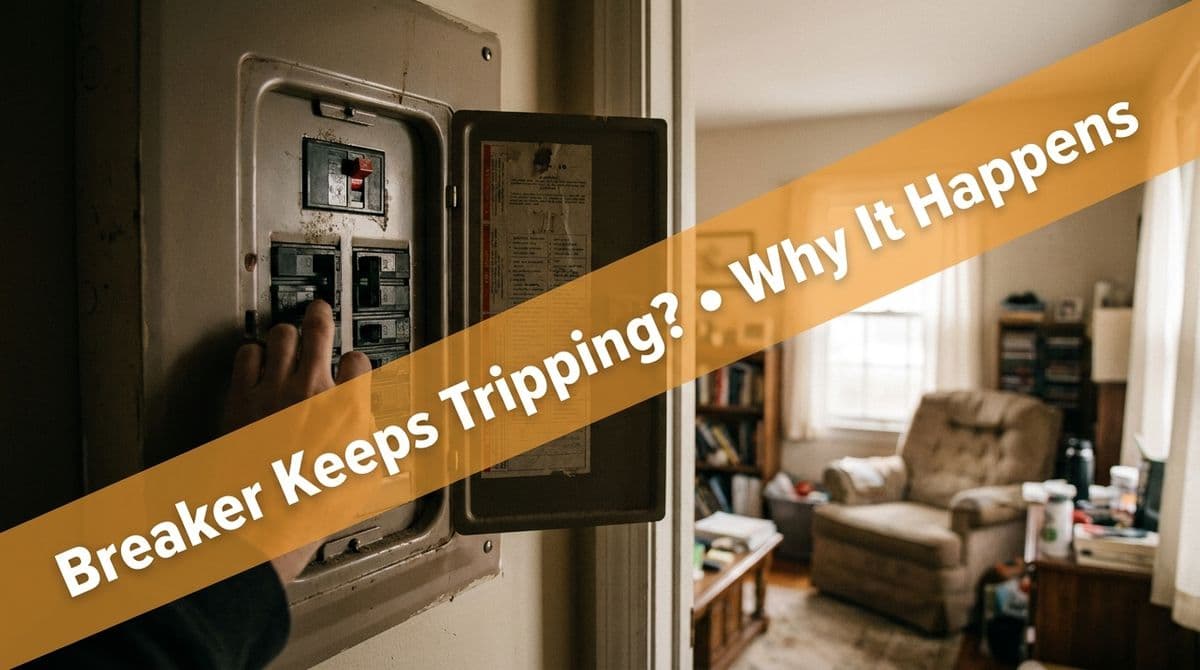
Breaker Keeps Tripping and Won’t Reset? Here’s What Might Be Going On
We recently got a call from a homeowner — let’s call him Bob — who said, “Part of the house is dark, and when I try to flip the breaker back on, it just won’t stay.” Every time he pushed the handle to ON, it snapped right back toward the middle or OFF. No sparks, no obvious burning smell, just part of his home without power and a very stubborn breaker.
That kind of situation can be frustrating and a little scary. When we hear “the breaker won’t reset,” our electrician brain immediately starts running through a checklist of what could be happening behind the scenes.
What It Means When a Breaker Won’t Stay On
A circuit breaker is basically a safety switch. When too much current flows through a circuit, or when there’s a fault (like a short), the breaker “trips” to protect your wiring and prevent fires. Normally, you can reset it by firmly switching it all the way OFF, then back ON.
In Bob’s case, the problem was that the breaker wouldn’t reset. That usually means one of three things:
- The circuit is still overloaded (too many things on one circuit)
- There’s a fault in the wiring or a device (short, ground fault, or loose connection)
- The breaker itself is failing (old, weakened, or damaged)
Until that underlying issue is fixed, a properly working breaker will keep tripping the moment you try to turn it back on — it’s doing its job.
First Step: Make Sure You’re Resetting the Breaker Correctly
Before we even head out, we sometimes walk homeowners through a quick reset over the phone. Many breakers sit in a middle “tripped” position that doesn’t look obviously OFF. If you just nudge it toward ON, it will spring back and make you think it won’t reset.
Here’s how to try a proper reset:
- Find the tripped breaker – The handle will usually be slightly out of line with the others or showing red/orange.
- Push it firmly to the OFF position – You should feel a definite click into OFF.
- Then flip it firmly to ON – Another solid click. Don’t just “tap” it.
If it immediately snaps back toward the middle or OFF again, stop there. That’s a sign there’s a real issue, not just a half-tripped handle.
Common Reasons Parts of Your Home Go Dark
When Bob called, he mentioned that “part of the house is dark,” not the whole home. That told us the main breaker was fine, and the problem was limited to one circuit (or possibly a couple of related ones).
Here are the most common causes we see when only part of a home loses power and a breaker won’t reset:
- Overloaded circuits – Space heaters, hair dryers, portable AC units, and multiple kitchen appliances on the same line can easily push a circuit past its rating.
- Faulty devices – A bad outlet, switch, light fixture, or appliance can create a short or ground fault that trips the breaker instantly.
- Damaged wiring – Loose connections in a junction box, rodent damage in the attic, or nicked wires from a DIY project.
- Aging or defective breaker – Breakers can weaken over time and nuisance trip, or sometimes fail and no longer latch properly.
What You Can Safely Check Yourself
There are a few basic things you can look at before calling an electrician, as long as you’re comfortable and don’t open any electrical boxes:
- Unplug everything on the affected circuit (lamps, TVs, space heaters, chargers, etc.).
- Try the proper reset again with everything unplugged.
- If it holds, plug things back in one by one until the breaker trips again – the last thing you plugged in is likely the culprit.
If the breaker still won’t stay on even with everything unplugged, that points more toward wiring issues or a bad breaker, and that’s where we step in.
When It’s Time to Stop Troubleshooting and Call an Electrician
With Bob, we scheduled a same-day visit for later that afternoon because of a few red flags he mentioned on the phone:
- The breaker snapped off instantly every time he tried it.
- He had already tried resetting it correctly.
- A whole section of the house was down, not just one outlet.
Here are some clear signs you should call an electrician rather than keep trying to reset the breaker:
- The breaker won’t reset or won’t stay on even with everything unplugged.
- You notice burning smells, buzzing, or warmth from the panel or outlets.
- You see any sign of scorch marks or melted plastic on outlets, switches, or the panel.
- The same breaker has been tripping repeatedly for days or weeks.
- You’re not comfortable working around the electrical panel – which is perfectly okay.
In Bob’s situation, we came out, tested the breaker, inspected the wiring on that circuit, and tracked down the issue safely with proper tools and protective gear. Once we repaired the problem and verified the connections, the breaker stayed on like it should.
Why You Shouldn’t Force a Stubborn Breaker
One thing we always stress: never force a breaker to stay on. If a breaker keeps tripping, it’s telling you there’s a problem. Taping it on, jamming it, or resetting it over and over again without fixing the cause is like turning off a smoke alarm without putting out the fire.
Behind that panel door, there can be very real risks: overheating wires in the walls, arcing connections, or failing equipment. A professional electrician can test the circuit, identify the cause, and make sure everything is safe before restoring power.
Need Help With a Breaker That Won’t Reset?
If you’re in a situation like Bob’s — part of your home is dark and the breaker just won’t stay on — you don’t have to guess what’s going on behind the walls. We’re happy to come out, diagnose the problem, and give you a clear, upfront estimate before any repair work is done.
Whether it turns out to be a simple breaker replacement or a wiring issue that needs attention, our goal is to get your lights back on and your home safe as quickly as possible.