Why Your Garage GFCI Trips & Your Door Won’t Open
Garage GFCI keeps tripping and your door won’t open? Learn what it means, simple checks you can do, and when it’s time to call an electrician.
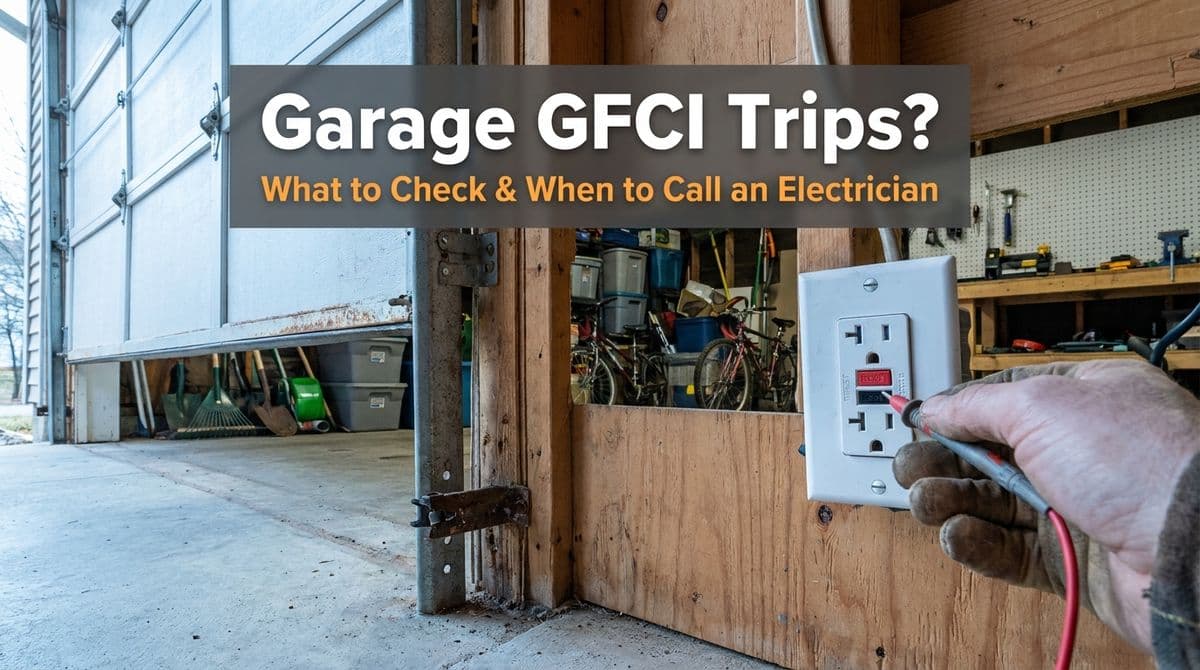
When a “Simple” Garage Outlet Knocks Out Your Door
We recently got a call from a customer — let’s call him Mike — who was dealing with a really frustrating problem at his rental property. The tenant called him saying, “The garage door won’t open, and the outlet in the garage keeps tripping.”
By the time Mike called us, he’d already figured out that the GFCI outlet in the garage was the one popping off, and every time it tripped, the garage door opener lost power. He wasn’t sure if he had a bad outlet, a bad breaker, or a bad opener — and of course, he wanted to know what this was going to cost before we came out.
We walked him through what might be going on, explained that we do free troubleshooting, and let him know a typical GFCI or breaker replacement runs in the $200–$250 range, including testing and rewiring if needed. That conversation is a perfect example of why garage GFCIs trip and what it means when your door suddenly won’t budge.
What a GFCI in Your Garage Actually Does
First, it helps to understand what that “funny looking” outlet is doing.
A GFCI (Ground Fault Circuit Interrupter) outlet constantly monitors the flow of electricity on the circuit. If it senses that current is leaking somewhere it shouldn’t — like through a wet surface or a damaged cord — it trips off in a fraction of a second.
In garages, GFCIs commonly protect:
- Wall outlets where you plug in tools or chargers
- The outlet that feeds your garage door opener
- Sometimes outdoor outlets or nearby circuits tied into the same GFCI
So when that outlet trips and your garage door opener loses power, the opener itself might be fine — it’s just not getting electricity anymore.
Common Reasons Your Garage GFCI Keeps Tripping
When we told Mike we’d come out and troubleshoot for free, we also gave him a quick rundown of the most common causes. In many homes, a tripping garage GFCI comes down to one of these:
1. Moisture or Dirt in the Outlet
Garages are dusty, often humid, and sometimes even get water blown in from the driveway. Over time, moisture, dust, or corrosion inside the GFCI can cause nuisance tripping.
Signs this might be the problem:
- Outlet looks discolored or rusty
- You see spider webs, dust buildup, or grime inside or around the outlet
- It trips even with nothing plugged in
2. A Problem With Something Plugged In
Anything on that circuit can trigger the GFCI, not just the garage door opener. We often see:
- Old refrigerators or freezers plugged into the garage circuit
- Extension cords left plugged in permanently
- Power tools with worn or nicked cords
If one of those devices is leaking current to ground, the GFCI is doing its job by shutting the circuit off.
3. A Failing Garage Door Opener
Sometimes the opener motor or internal electronics start to fail and leak a small amount of current. A standard outlet might ignore that, but a GFCI won’t. If the GFCI trips only when the door tries to move, the opener itself can be suspect.
4. Loose Connections or a Faulty GFCI
Like we explained to Mike, it’s often the device itself. GFCIs do wear out, especially in harsher garage environments.
Other times, the wiring connections behind the outlet are loose or improperly landed, which can create intermittent trips and, in the worst cases, a fire hazard. That’s why, when we replace a GFCI, we also inspect and tighten all connections and confirm things are correct at the breaker panel.
How to Safely Troubleshoot a Tripping Garage GFCI
There are a few safe checks you can do before calling an electrician. These are the same basic steps we talked through with Mike before scheduling his appointment.
Step 1: Identify What’s on the Circuit
Start by unplugging everything from the garage outlets, including:
- Refrigerators or freezers
- Battery chargers
- Extension cords and power strips
- Power tools
Leave the garage door opener plugged in for now so you can see if the problem is related to it.
Step 2: Try Resetting the GFCI
Press the RESET button on the GFCI. If it immediately trips again with everything unplugged, that’s a sign of either a bad GFCI, bad wiring, or an issue upstream (like at the breaker).
If it holds, try operating the garage door. If it trips as the door moves, the opener might be at fault.
Step 3: Check Other GFCIs in the Home
Sometimes the tripped device in your garage is actually being controlled by a different GFCI elsewhere (like in a bathroom or outside), or a breaker with a built-in GFCI/AFCI function in the panel.
Take a quick walk around and look for any outlets with TEST/RESET buttons and check for tripped breakers in the electrical panel.
When It’s Time to Call an Electrician
In Mike’s case, he wanted to know up front whether this was likely to be a $50 issue or a $500 issue. The honest answer: you don’t really know until the circuit is properly tested. That’s why we came out, tested the GFCI, checked the breaker, and inspected the wiring before recommending any replacement.
You should bring in a pro if:
- The GFCI won’t reset or trips instantly, even with everything unplugged
- You see signs of burning, melting, or discoloration on the outlet or cover plate
- The breaker in the panel is warm, humming, or tripping along with the GFCI
- The same circuit has been worked on before and you’re not sure how it was wired
When we come out to a call like this, we typically:
- Test the GFCI itself with a dedicated tester
- Verify correct wiring and tight connections
- Check the breaker and panel terminations
- Confirm what loads are actually on the circuit (including the opener)
If the fix is as simple as a faulty GFCI or breaker, the repair is usually straightforward and, in many cases, in that same $200–$250 range we quoted Mike over the phone — including parts, labor, and full testing.
Don’t Ignore a Tripping GFCI
A GFCI that keeps tripping isn’t just an inconvenience keeping your garage door from opening — it’s a built-in safety device telling you something isn’t right. Whether it’s a worn-out outlet, a failing opener, or wiring that needs attention, it’s worth having it checked.
If your garage GFCI won’t stop tripping and your door won’t open, we’re happy to come out, troubleshoot the problem at no cost, and then give you a clear, upfront price before any repairs. That way you know exactly what’s going on — and your garage door can get back to doing its job.